Permaculture and Regenerative Growing for Dry Climates
A practical, seasonal guide to water-wise gardens, food forests and living soil for long dry seasons, from the Mediterranean and California to Chile, the Cape, southern Australia and highland Mexico.
If you learned to garden somewhere green and rainy, a long dry summer can feel like a personal insult. The hose runs every evening, the lettuce bolts, and by midsummer the ground is as hard as a terracotta tile. The trouble is rarely the gardener. It is that the calendar in our heads was written for a different climate.
In a Mediterranean-type climate the year turns the other way round. Rain arrives in autumn and winter, the land grows through the cool months, and summer is a season of rest rather than growth. In summer-rain highlands such as central Mexico the dry season falls in winter and spring instead. Either way, plan around the dry months instead of fighting them and a garden becomes generous, resilient and far less thirsty. This guide covers water, soil, trees, fire and what to do each month.
start hereUnderstanding the dry-climate growing year
Mediterranean climates occur in only a handful of places: around the Mediterranean Sea itself, in California, in central Chile, in the south-western corner of South Africa around the Western Cape, and across parts of southern and south-western Australia. They share one simple pattern. Almost all the rain falls in winter and spring, and summer can pass for four to six months with no significant rain at all. What matters more than the annual total is when it falls. Inland central Portugal, for example, often sees around 100 mm of rain in October and less than 10 mm in July.
The shape of a Mediterranean year north of the equator, drawn by hand rather than to scale: wet from autumn to spring, with a long dry gap in high summer. In Chile, the Cape and southern Australia the same curve runs six months later.
That dry gap shapes everything. Native plants in all of these regions grow in the cool, wet months and slow down in summer, and many drop leaves or go dormant. A good dry-summer garden copies them: plant as the rains return, grow through winter and spring, and water only the crops you deliberately choose in the hottest months.
Seasonally dry climates with summer rain work differently. Across most of Mexico the rainy season runs from about June to mid-October, and the rest of the year is much drier. Mexico City averages only around 5 mm of rain in February but more than 160 mm in July. The principles here still apply, but the growing season starts with the summer rains and the hard months are the dry spring before them.
Coast, hills and valleysFrost is the other variable. Coastal gardens may barely see it, while inland valleys, higher ground and high-altitude plateaus can get sharp frosts on clear winter nights. Treat every date on this page as a starting point, then adjust by watching your own ground.
catch it, sink it, keep itWater-wise gardening: bank the wet season, spend it in the dry
The most useful shift in thinking is this: dry-season water is not really a dry-season problem. It is decided in the wet months, by how much rain your land manages to catch and hold. Bare, compacted slopes shed rain straight into the nearest stream. Mulched, planted, gently shaped ground drinks it in and stores it in the soil and the water table.
Slow the water down. On slopes, swales and small earth berms dug along the contour let runoff pause and soak in. Even a line of stones or brush laid across a slope helps.
Keep soil covered. A thick mulch of straw, wood chip or chopped prunings reduces evaporation and keeps roots cool. Bare soil under a dry-season sun can lose moisture remarkably fast.
Group plants by thirst. Put the vegetables and young trees that need regular water close to the house and the water source. Let the outer zones rely on rain alone.
Water deep and seldom. A long soak once or twice a week, early in the morning, trains roots downward. Frequent light sprinkling keeps them shallow and dependent.
Deliver water to the root. Drip lines and buried unglazed clay pots, called ollas, put water where it is needed and waste very little to the air.
Collect what falls. Roof water can fill tanks in the wet season and carry the vegetable garden a good way into the dry one. Rules on ponds, dams and water storage differ from place to place, so check locally before building anything large.
One counter-intuitive point: many plants native to summer-dry regions, from Mediterranean shrubs to California's manzanitas, can be harmed by regular summer watering. Warm, wet soil encourages root rots in plants that evolved for a dry season. Once natives have come through their first dry season or two, leave them alone.
the real cropBuilding soil on thin, dry ground
Many rural plots in dry regions sit on thin, stony soils that have been ploughed, grazed or burned for generations. Regenerative growing starts by feeding the life underground, because living soil holds more water, cycles more nutrients and grows healthier plants.
The methods are simple and slow. Stop turning the soil wherever you can, since every dig exposes it to sun and wind. Add organic matter continually: compost, well-rotted manure, leaf litter and wood chip. As the rains begin, sow a green manure mix on empty beds. In winter-rain climates, broad beans, vetch and oats work well together, fixing nitrogen and covering the ground through the wet months before being cut down in spring and left as mulch. In summer-rain climates, sow at the start of the summer rains instead.
Chop-and-drop is the permaculture habit that ties it together. Prune fast-growing support plants and lay the cuttings where they fall. Over a few seasons that steady rain of leaves turns hard ground into something dark and crumbly, and you will see it in how long the soil stays damp after the last rain of the season.
layers of shadeFood forests the dry-climate way
A food forest is a planting that imitates the structure of a woodland edge: tall trees, smaller trees, shrubs, herbs and ground cover, all producing something useful. In a cool, wet climate the aim is often to capture as much light as possible. In a dry climate the canopy has a different job. It provides shade, lowers soil temperature, cuts evaporation and breaks drying winds.
A dry-climate food forest is therefore more open and more drought-tolerant. In winter-rain regions the backbone might be olive, fig, almond, pomegranate, carob and quince. In summer-rain highlands the palette changes: avocado and guava in frost-free spots, prickly pear and native mesquite on drier ground. Underneath go local native shrubs and nitrogen-fixing plants, then an understorey of rosemary, thyme, sage, oregano and lavender, which feed pollinators and ask for very little water.
Two habits make the difference. Plant at the start of the wet season, so every tree has a full rainy season to grow roots before its first dry spell. And water young trees generously for their first two or three dry seasons, then wean them off gradually. The aim is a system that survives on rainfall, with your hose kept for the vegetable beds.
the old landscapesLessons from old dry landscapes
Long before anyone said the word permaculture, farmers in dry places built systems that worked with the climate. In Spain and Portugal, the dehesa or montado is open woodland of cork and holm oaks with pasture, crops or grazing animals beneath. Trees give shade, fodder, acorns, firewood and cork, while the ground below stays productive. The cork oak (Quercus suber) even carries its own fire protection: a thick, insulating bark that regrows after each harvest.
Mexico has its own ancient model. The milpa grows maize, beans and squash together, often alongside chillies, tomatoes, amaranth and other crops, and has traditionally been rotated with long periods of fallow. Beans climb the maize, squash leaves shade the soil, and one field yields a varied harvest.
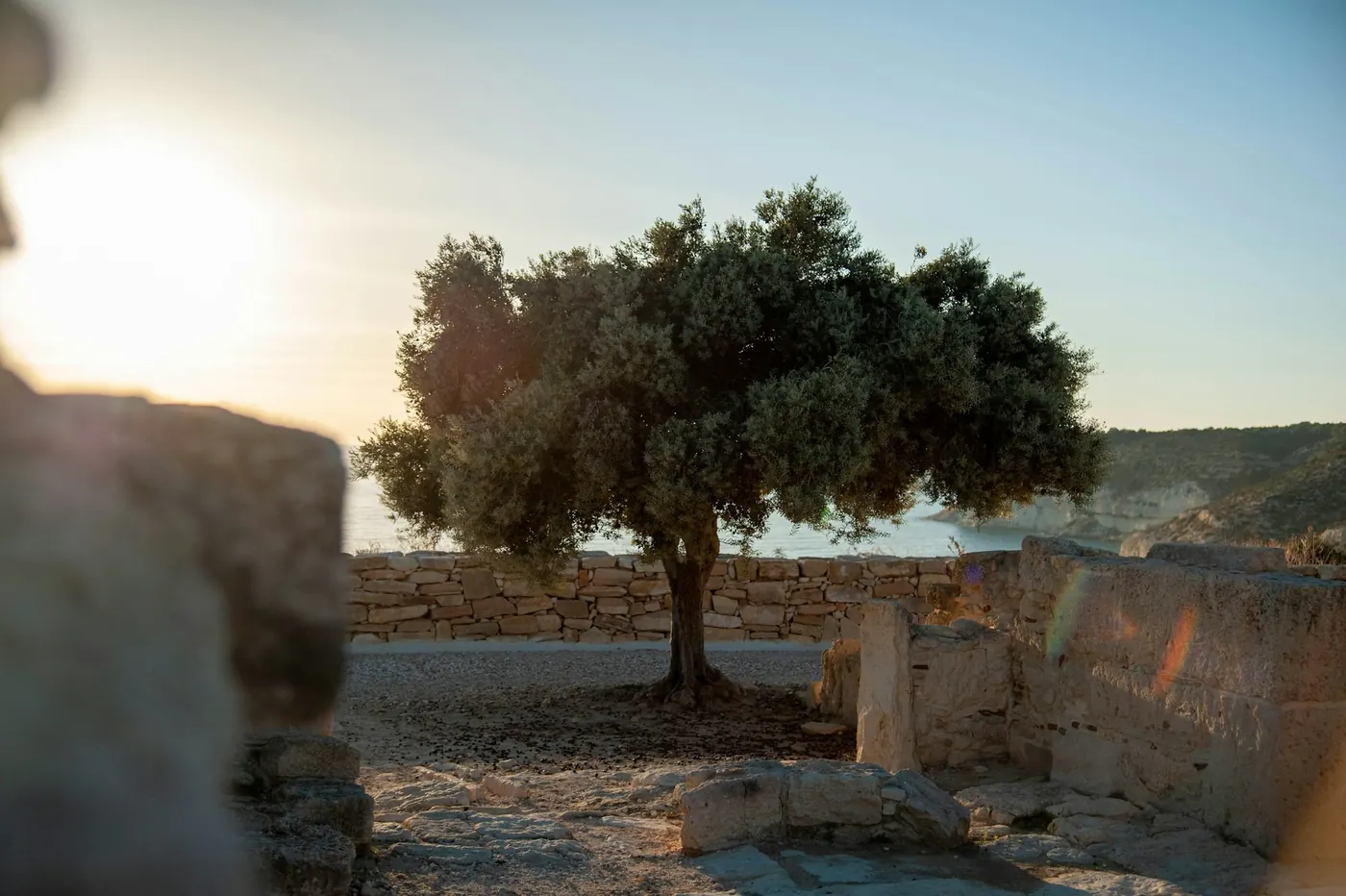
Olives are the other lesson. Traditional groves around the Mediterranean are widely spaced and dry-farmed, and olives are now grown in California, Chile, South Africa and Australia too. Young olives are tender, so in frosty spots plant them in late winter or spring. Old, neglected groves often respond well to restorative pruning and a mulch of their own trimmings.
plants that belong hereNative plants worth growing, region by region
Native plants have already solved the puzzle of your local dry season. They feed local wildlife, need little care once established and look right in the landscape. A local native plant nursery is the best guide, but here are some well-known examples:
Mediterranean Basin. Strawberry tree (Arbutus unedo), mastic (Pistacia lentiscus), myrtle (Myrtus communis), laurustinus (Viburnum tinus), rosemary and Spanish lavender, with cork and holm oaks for the long term.
California. Toyon (Heteromeles arbutifolia), manzanitas (Arctostaphylos), California lilacs (Ceanothus) and California buckwheat (Eriogonum fasciculatum).
Central Chile. Quillay or soapbark tree (Quillaja saponaria), peumo (Cryptocarya alba) and boldo (Peumus boldus).
Western Cape. The fynbos flora of proteas, ericas and grass-like restios, which generally prefer lean, unfertilised soil.
Southern Australia. Grevilleas, emu bushes (Eremophila) and saltbushes (Atriplex).
Central Mexico. Agaves, prickly pear (Opuntia), native sages (Salvia) and mesquite (Prosopis).
Plant natives at the start of your wet season and water them only through their first dry season or two. Favour plants native to your own region: a species that belongs in one of these places can become an invasive weed in another, as Australian wattles have in the Cape and prickly pear once did in Australia. And some beautiful natives, such as the Mediterranean rockroses (Cistus), are resinous and burn readily, so place them away from buildings.
designing for the dry monthsWildfire-resilient landscaping
Fire is part of every Mediterranean-type landscape, from California's chaparral to the Cape's fynbos, and rural growers have to plan for it. The goal is not a scorched, bare yard. It is a landscape that fire struggles to move through, especially near the house.
Many places set rules for managing vegetation around buildings, and they differ widely. California's guidance works outward in zones up to 100 feet (about 30 metres) from a home, with the first 5 feet kept as free of fuel as possible. Portugal requires a managed strip of up to 50 metres around buildings in forest areas. Australian states set their own bushfire rules. The details change from time to time, so check the current requirements with your local fire authority or municipality before you plan.
Keep the inner zone green and low. Irrigated vegetable beds, low herb lawns and well-spaced fruit trees make a fire break that also feeds you.
Break the fuel ladder. Prune lower branches so ground fire cannot climb into tree crowns, and keep shrubs apart from trees.
Choose plants with care. Deciduous and moisture-rich plants burn less readily than resinous, oily shrubs and dense conifers or eucalyptus.
Use the whole toolbox. Stone walls, gravel paths, grazing animals and ponds all interrupt continuous fuel.
Tidy before the dry season. Clear dead material, dry grass and leaves from gutters and near walls while the ground is still green.
month by monthA seasonal planting calendar for dry-summer gardens
This calendar follows a typical Mediterranean climate in the Northern Hemisphere, such as the lands around the Mediterranean Sea or California. Coastal gardens can often sow a little earlier in spring and later in autumn. Frost pockets and higher ground may need to wait a few weeks longer. Keep your own notes and it will soon fit your land exactly.
Southern Hemisphere and summer-rain gardensIn central Chile, the Western Cape and southern Australia, shift every entry by six months: read July for January, and so on. The highlighted month follows the Northern Hemisphere. In summer-rain climates such as central Mexico the pattern changes rather than shifts: plant trees and rain-fed crops as the rains settle in, around June, and use the dry spring to mulch, save water and prepare.
Winter
Spring
Summer
Autumn
this month
January
Sow & plant
Bare-root fruit trees, broad beans, peas, onion sets.
Tend
Prune deciduous fruit trees on dry days. Top up mulch.
this month
February
Sow & plant
Tomatoes, peppers and aubergines under cover. Last bare-root trees.
Tend
Plan the summer beds and check irrigation parts.
this month
March
Sow & plant
Potatoes, lettuce, carrots, beetroot, chard.
Tend
Cut green manures and leave them as mulch. Pot on seedlings.
this month
April
Sow & plant
Beans, courgettes, squash, sweetcorn. Plant out tomatoes once frost has passed.
Tend
Mulch deeply before the soil dries. Clear fuel near buildings.
this month
May
Sow & plant
Peppers, aubergines and melons outside. Basil.
Tend
Set up drip lines and shade before the heat arrives.
this month
June
Harvest
Garlic, broad beans, early potatoes, first courgettes.
Tend
Water deeply in the early morning. Let spring beds rest under mulch.
this month
July
Harvest
Tomatoes, beans, cucumbers, figs begin in warm spots.
Tend
Shade cloth over tender crops. Save seed. Do little else in the heat.
this month
August
Sow & plant
Cabbages, kale and broccoli in shaded trays for autumn.
Tend
Keep watering routines steady. Plan autumn planting.
this month
September
Sow & plant
Spinach, rocket, lettuce, radish. Plant out brassica seedlings late in the month.
Tend
Prepare beds and compost ready for the rains.
this month
October
Sow & plant
Garlic, broad beans, onions, green manures. Native shrubs once the rains arrive.
Tend
Olive harvest begins in many areas. Shape swales while the soil is soft.
this month
November
Sow & plant
The prime month for evergreen trees, natives and hedges. More broad beans and peas.
Tend
Gather leaves for mulch. Collect rainwater.
this month
December
Sow & plant
Bare-root fruit trees and soft fruit.
Tend
Mulch, rest and plan. Order seeds for spring.
Notice how the busiest planting months are October to February, or April to August south of the equator. That is the heart of Mediterranean growing: the work you do while the rain falls decides how well the garden carries itself through the dry months that follow.
from the potting benchQuestions growers ask
When is the best time to plant trees and shrubs in a dry-summer climate?
At the start of the wet season, once the first rains have soaked the ground. In Mediterranean climates that means autumn and early winter: roughly late October to February in the Northern Hemisphere, and April to August in the Southern Hemisphere. Roots then have the whole wet season to establish before the dry months. Deciduous fruit trees go in bare-root in midwinter. In summer-rain climates such as central Mexico, plant as the rains begin instead.
Can I grow vegetables through a long dry summer with little water?
Yes, if you plan for it. Grow the main summer crops in a compact, heavily mulched area close to your water source, water deeply and infrequently in the early morning, use drip lines or buried clay pots, and give crops some afternoon shade in the hottest weeks. Much of the rest of the garden can rest through the dry season, the way the wild landscape does.
Does a food forest work in a dry climate?
It does, but it looks different from a food forest in a cool, wet climate. It is more open, built around drought-tolerant trees such as olive, fig, almond, carob and pomegranate, with native shrubs and aromatic herbs underneath. The canopy is there for shade and moisture, and trees go in at the start of the wet season so they are established before their first dry spell.
Which native plants suit a water-wise garden?
It depends on where you are, so start with a local native plant nursery. Well-known examples include strawberry tree, mastic and myrtle around the Mediterranean; toyon, manzanita and ceanothus in California; quillay and peumo in central Chile; proteas and restios in the Western Cape; grevilleas and saltbushes in southern Australia; and agaves, prickly pear and native sages in central Mexico. Plant them at the start of the wet season and avoid regular dry-season watering once they are established.
How do I make a rural property more fire-resilient?
Start by finding out what your local rules require, since vegetation-management distances differ between countries and change over time. Then keep the zone nearest the house low, green and well spaced, remove dead material and resinous or oily shrubs close to buildings, prune low branches so fire cannot climb into tree crowns, and break up continuous fuel with paths, stone walls, grazed ground and irrigated beds.